
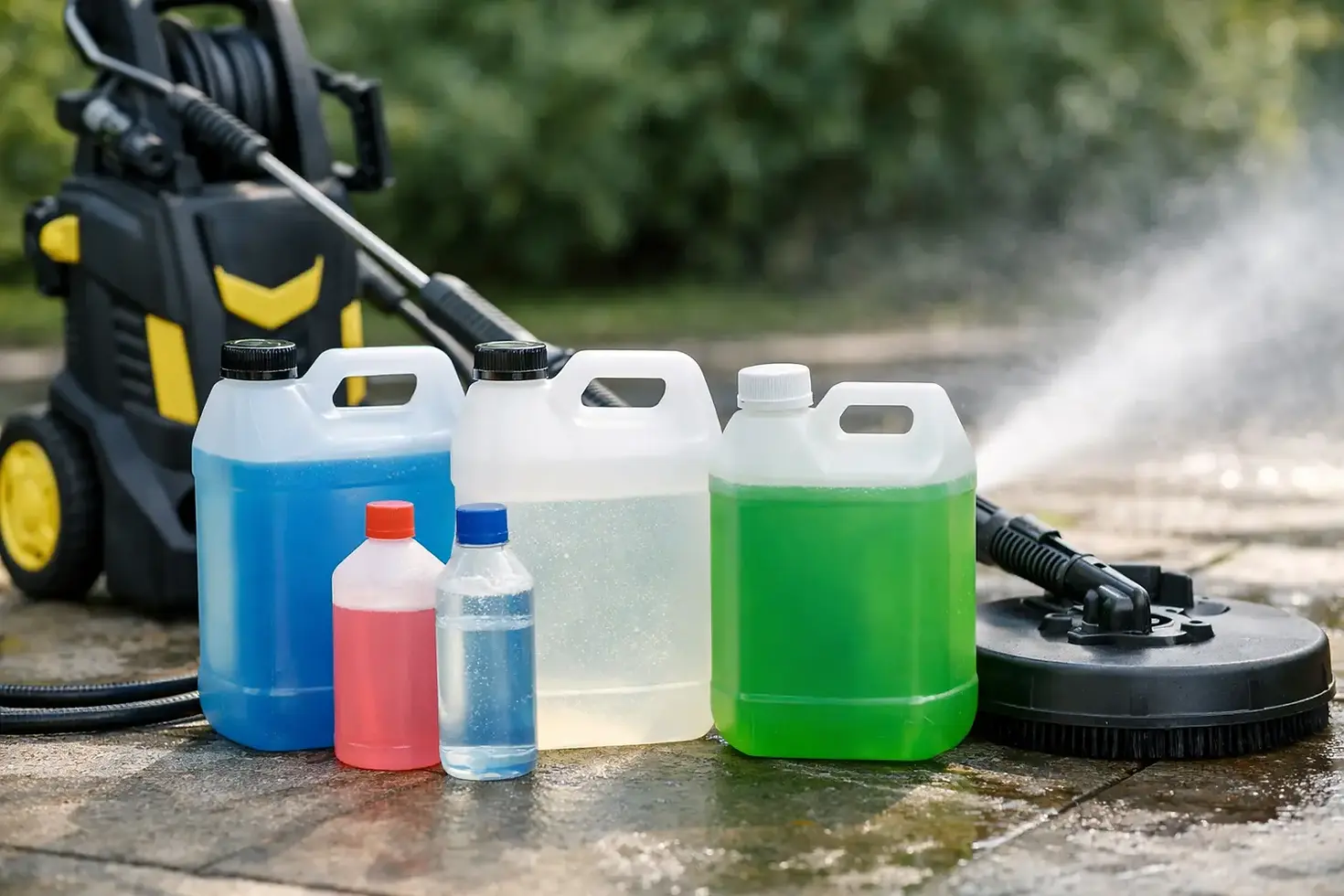
Pressure Washer Chemicals Guide for Safe Cleaning

A stained driveway, green siding, or black-streaked roof can make an otherwise well-kept property look neglected fast. The right cleaner can bring back that fresh, cared-for look without brute-force pressure. This pressure washer chemicals guide explains what common cleaners do, where they belong, and how to get visible results without damaging your home, landscaping, or equipment.
The big rule is simple: choose the chemical for the stain first, then use only as much pressure as the surface can handle. More pressure is not always better. On many exterior surfaces, the safest and most effective approach is letting the solution do the cleaning work, followed by a controlled rinse.
Start With the Stain, Not the Machine
Pressure washing chemicals are not interchangeable. Mold and algae need a different approach than oil stains, rust marks, mineral buildup, or plain dirt. Using the wrong product can leave behind discoloration, damage a finish, or waste an afternoon with very little improvement.
Organic growth is common on humid properties, especially on north-facing siding, shaded patios, fences, roofs, and walkways. It usually appears green, black, or dark gray and may feel slick when wet. Oil and grease are more likely to show up on driveways, garage pads, restaurant areas, and around trash enclosures. Rust is typically orange or brown, while hard-water deposits often look white, chalky, or hazy.
Before applying anything, identify the surface too. Painted wood, vinyl, stucco, brick, concrete, asphalt shingles, composite decking, natural stone, and window glass all have different limits. A cleaner that performs beautifully on concrete may be far too aggressive for a roof or delicate exterior trim.
Pressure Washer Chemicals Guide: The Main Types
Sodium Hypochlorite for Algae, Mildew, and Organic Stains
Sodium hypochlorite is the active cleaning ingredient commonly associated with liquid bleach. In exterior cleaning, it is widely used to treat algae, mildew, mold staining, and other organic buildup on siding, concrete, fencing, and roofs when mixed and applied correctly.
For house washing and roof cleaning, a soft wash method is usually the right choice. That means applying a properly diluted solution at low pressure, allowing it to work, and rinsing as needed. High pressure can force water behind siding, strip paint, scar wood, and shorten the life of roofing materials. A roof should not be pressure washed. Professional soft washing protects the shingles while targeting the dark organic streaks that hurt curb appeal.
Bleach-based solutions demand care. Protect plants by pre-wetting them with fresh water, keeping the solution off sensitive foliage whenever possible, and rinsing landscaping again after the job. Never mix bleach with acids, ammonia, or unknown cleaners. That can create dangerous fumes.
Surfactants for Better Coverage and Longer Dwell Time
A surfactant is the supporting player that makes a cleaning solution work more effectively. It helps the mixture cling to vertical surfaces, spread evenly, penetrate grime, and stay wet long enough to do its job. Many surfactants also add foam, which makes it easier to see where the solution has been applied.
For homeowners, a quality surfactant is especially useful on siding, fences, brick, and other vertical surfaces where plain water-like solutions run off too quickly. It does not replace the active cleaning chemical. Instead, it helps that chemical work more efficiently and can reduce the temptation to compensate with excessive pressure.
Use only surfactants designed for exterior cleaning and follow the product label. Too much soap can create unnecessary foam, make rinsing harder, and leave residue on glass or painted surfaces.
Degreasers for Driveways, Garages, and Commercial Pads
Degreasers are built for petroleum-based stains, tire marks, cooking grease, and heavy grime. They are a practical choice for garage floors, concrete driveways, dumpster areas, loading spaces, and shop pads. For a driveway with a few fresh oil spots, treating those spots before cleaning the full slab produces much better results than spraying the whole area and hoping pressure alone handles it.
Give a degreaser enough dwell time to break down the stain, but do not allow it to dry on the surface. Agitation with a stiff brush can help on stubborn areas before rinsing. Hot water improves grease removal when the equipment allows it, but cold-water pressure washing with the right product can still make a major difference.
Some old oil stains have soaked deeply into porous concrete. They may improve significantly without disappearing completely. Setting that expectation upfront helps avoid the idea that every dark mark can be erased in one pass.
Acid Cleaners for Rust, Mineral Deposits, and Concrete Brightening
Acid-based cleaners can remove rust stains, mineral deposits, efflorescence, and some post-construction residue. They may also brighten concrete after a deep cleaning. These are specialty products, not all-purpose driveway soap.
Acids can etch concrete, damage natural stone, dull glass, harm metal fixtures, and create serious safety concerns if used carelessly. They should never be mixed with bleach products. If you are dealing with rust streaks from irrigation, battery acid marks, or heavy mineral buildup, use a cleaner specifically labeled for that stain and surface, test a small hidden area first, and follow the dilution instructions exactly.
For many homeowners, this is a smart point to call a professional. The right chemistry can create a dramatic transformation, but the wrong acid or dwell time can leave permanent damage behind.
Oxygen-Based Cleaners for Gentle Exterior Projects
Oxygen-based cleaners, often made with sodium percarbonate, are a gentler option for some wood, composite, and general organic-cleaning projects. Once activated with water, they release oxygen that helps lift dirt and organic staining. They can be useful when a bleach-based approach is not the right fit for the material or project.
They are not a universal replacement for sodium hypochlorite. Heavily stained roofs, deep algae growth, and dense mildew often need a different solution. Still, oxygen cleaners can be a solid choice for routine maintenance where a milder product is preferred.
Dilution, Dwell Time, and Rinsing Matter Most
The strongest chemical is rarely the best chemical. Correct dilution is where safe, consistent results begin. Every product should have label directions that identify appropriate mix ratios, required protective gear, dwell time, and surfaces to avoid. Start there, not with a guess.
Dwell time means the period the product stays on the surface before rinsing. Too little dwell time means the cleaner has not had time to work. Too much can dry out, stain sensitive surfaces, or create uneven results. Work in manageable sections, especially on hot Texas days, and keep an eye on the surface instead of walking away.
Rinsing is equally important. Flush siding, concrete, nearby landscaping, window frames, and fixtures thoroughly. When using a pressure washer chemical injector, run clean water through the system after each use. This helps protect hoses, injectors, seals, and other parts from chemical residue.
Protect Your Property Before You Start
A clean exterior should not come at the expense of dead plants, streaked windows, or damaged finishes. Move outdoor furniture, cover or relocate sensitive items when practical, and close windows and doors. Wet surrounding vegetation before applying chemicals, and keep a garden hose ready for immediate rinsing.
Wear chemical-resistant gloves, eye protection, closed-toe shoes, and clothing that covers exposed skin. Avoid spraying in high wind, which can carry solution onto cars, neighbors' property, plants, and glass. Keep children and pets away from the work area until surfaces are rinsed and dry.
Also consider runoff. Do not allow concentrated cleaners, oily waste, or wash water to flow toward storm drains, ponds, or waterways. Local requirements vary, particularly for commercial properties and heavy-degreasing work.
When DIY Makes Sense and When to Bring in a Pro
A homeowner can handle light driveway cleaning, small patio projects, or routine siding touch-ups with the correct product, a careful test spot, and patient rinsing. But steep roofs, extensive algae, delicate surfaces, severe staining, and large commercial areas bring more risk than most weekend projects are worth.
HTX Pressure Pros takes the guesswork out of recurring exterior care with scheduled cleaning options that keep buildup from becoming a bigger, more expensive job. Regular maintenance also means your property stays ready for guests, HOA expectations, and the pride that comes with pulling into a clean home.
The best cleaning result is not the one that uses the most pressure or the harshest chemical. It is the one that removes the stain, protects the surface, and keeps your property looking cared for long after the rinse water clears.


Comments